
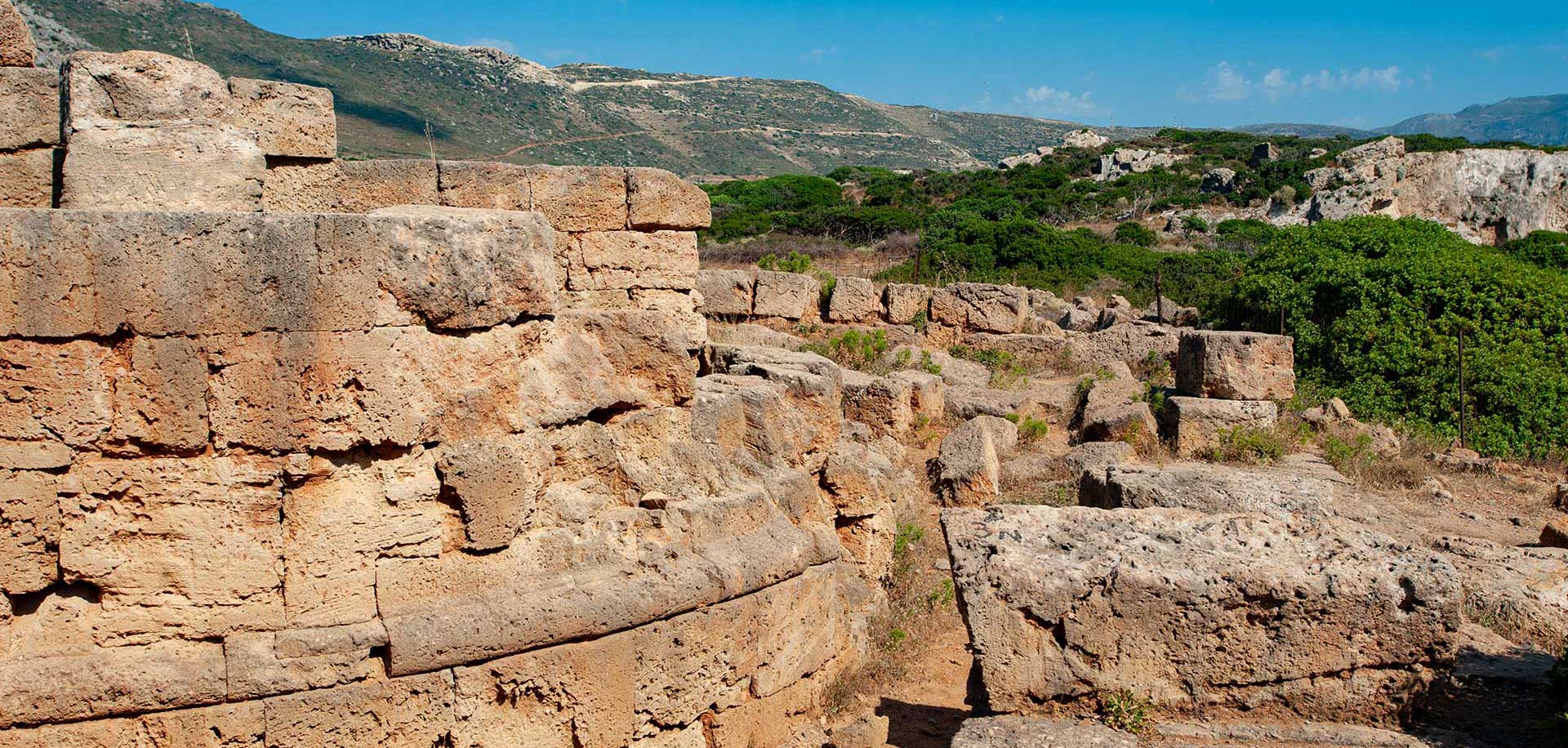
Ancient Phalassarna: The Pirate City with a Harbor Stuck in the Mud
Most travelers know Falassarna for its sprawling sandy bays, epic windsurfing waves, and legendary west-coast sunsets. But just a few hundred meters north of those luxury beach bars lies one of the most historically mind-bending archaeological sites in the Mediterranean: Ancient Phalassarna.
Once a dominant, wealthy maritime superpower during the Hellenistic period, this ancient city-state possessed an engineering marvel—a massive, heavily fortified war port. Today, due to an apocalyptic cataclysm, that very same ancient harbor sits completely dry, landlocked, and $100\text{ meters}$ away from the sea.
Here is the ultimate guide to the fascinating history, the geological mystery, and how to visit the ruins of Chania’s ancient pirate stronghold.
The Rise of a Maritime Superpower & Pirate Hub
Ancient Phalassarna flourished between the 4th and 2nd centuries BC. Positioned on the absolute northwestern tip of Crete, it controlled the vital shipping lanes connecting the Aegean Sea to North Africa and Italy.
The citizens of Phalassarna were elite sailors, fierce warriors, and notorious pirates. They built an entirely enclosed “closed harbor” (Kleftos Limen), cutting a canal directly into a natural lagoon and ringing the entire basin with massive, defensive stone towers and walls. This design allowed them to lure foreign merchant ships in, trap them, or launch surprise raids on passing vessels.
Their aggressive piracy and constant bloody wars with the neighboring city-state of Polyrrhenia eventually caught the attention of the ultimate superpower: Rome. In 67 BC, fed up with Cretan pirates disrupting Mediterranean trade, Roman legions marched in, brutally sacked Phalassarna, blocked their harbor canal with massive stones, and destroyed the city forever.
The Geological Phenomenon: The Day Western Crete Rose
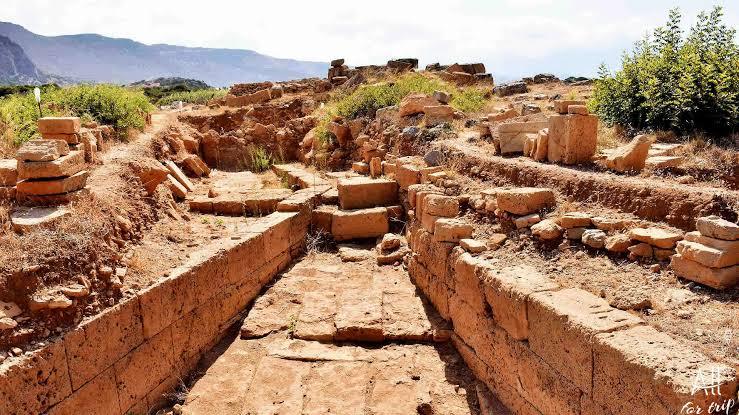
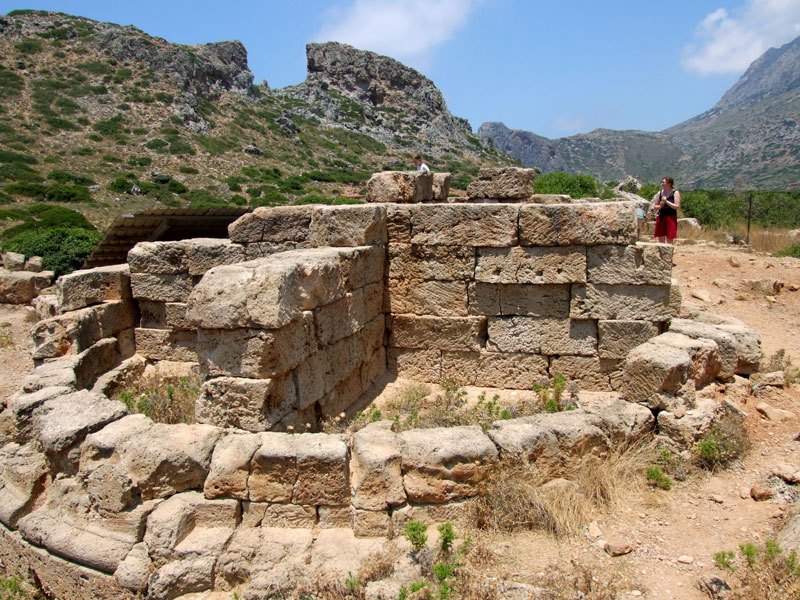
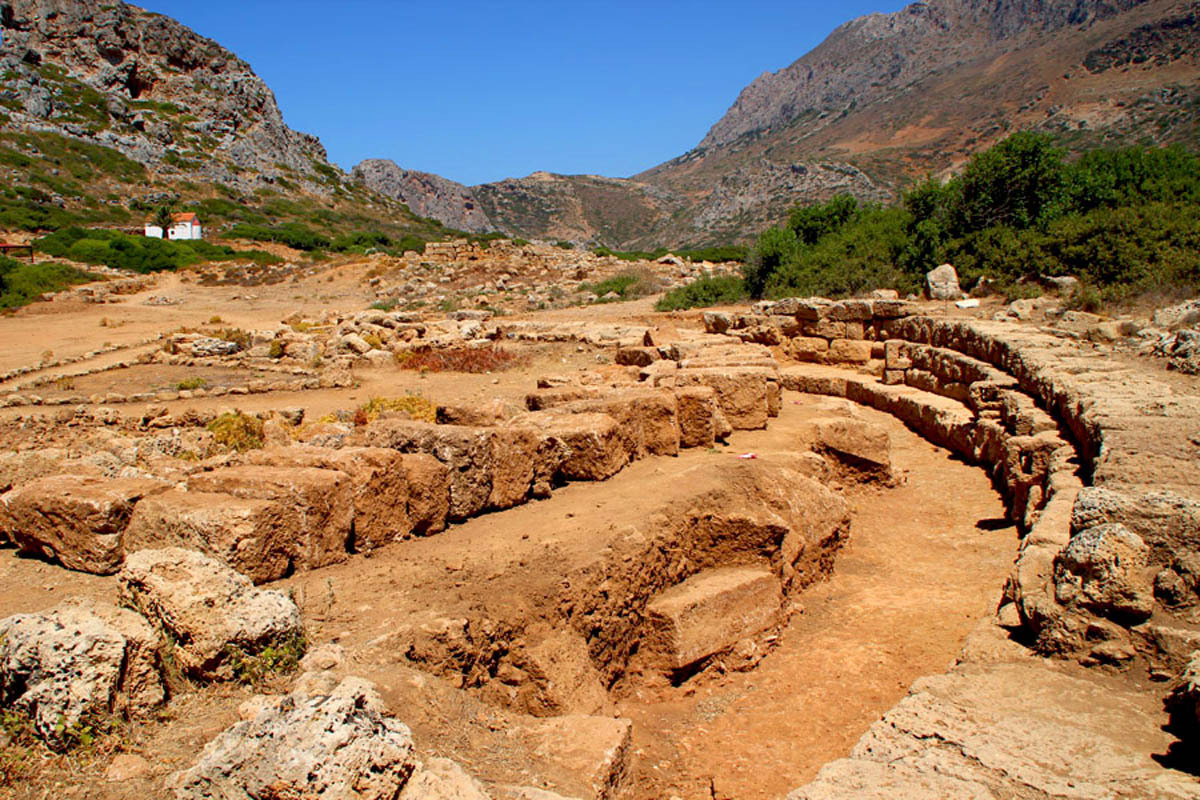
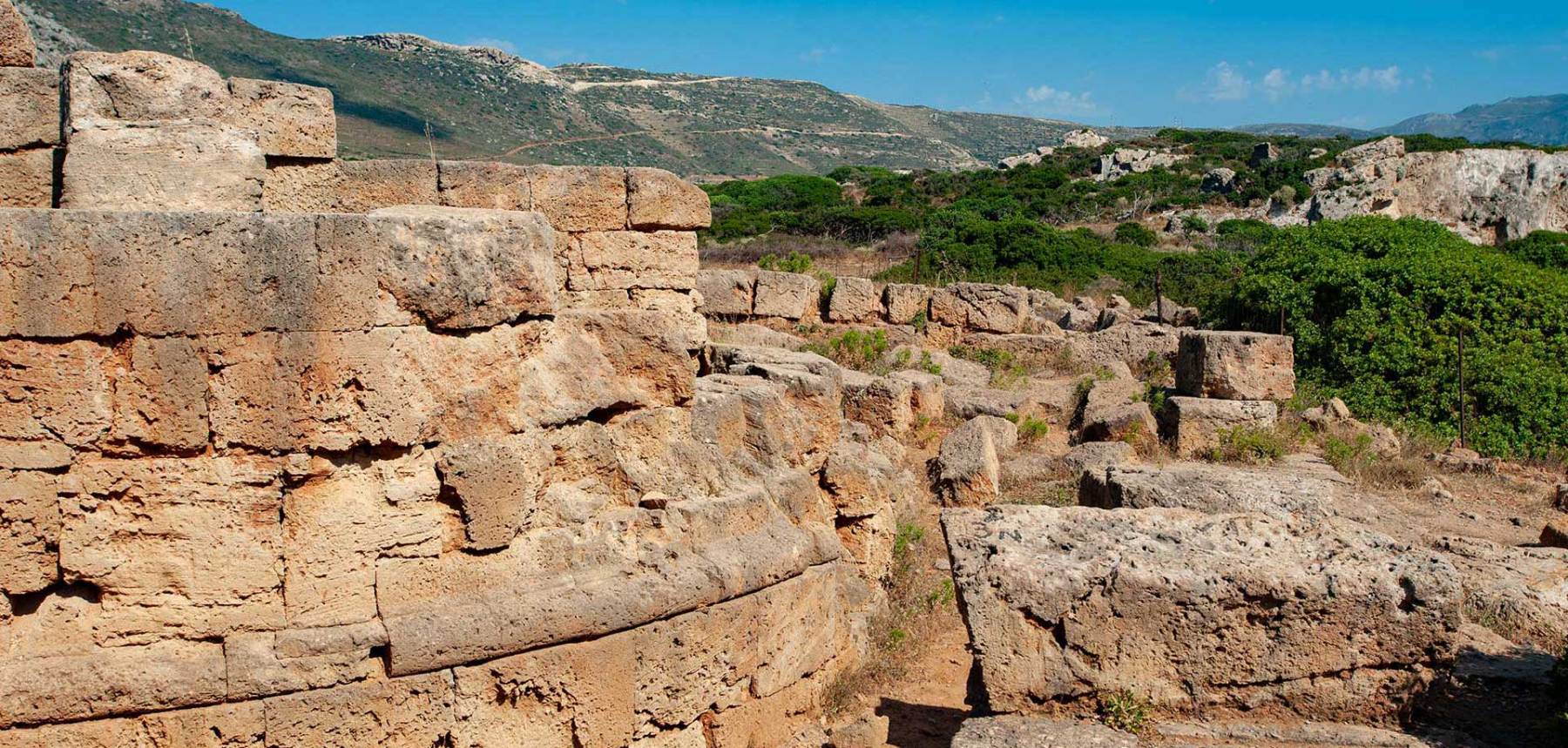
If you visit the archaeological site today, you will immediately notice something bizarre. You can clearly walk among the ancient stone quays, boat slips, and defensive towers where warships used to tie up—but there is no water. The entire harbor basin is surrounded by dry land, grass, and dirt.
What happened?
The answer is one of the most violent natural disasters in human history: The Great Mediterranean Earthquake of July 21, 365 AD.
Centuries after the Romans abandoned the city, a massive earthquake—estimated to be a magnitude 8.5 or higher—struck off the coast of southwest Crete. The mega-quake triggered a devastating tsunami that wiped out coastal towns across Greece, Egypt, and Italy.
The tectonic force was so intense that it caused the entire western plate of Crete to violently tilt upward. This geological phenomenon, known as tectonic uplift, raised the western coastline of the island by up to 6 to 9 meters ($20\text{ to }30\text{ feet}$) out of the water in a single day. The sea instantly retreated, leaving Phalassarna’s proud naval harbor permanently high, dry, and frozen in time.
🏛️ What to Look For When Walking the Ruins
The archaeological site is beautifully raw and uncrowded, offering a quiet contrast to the busy beaches nearby. As you explore, make sure to look out for these highlights:
-
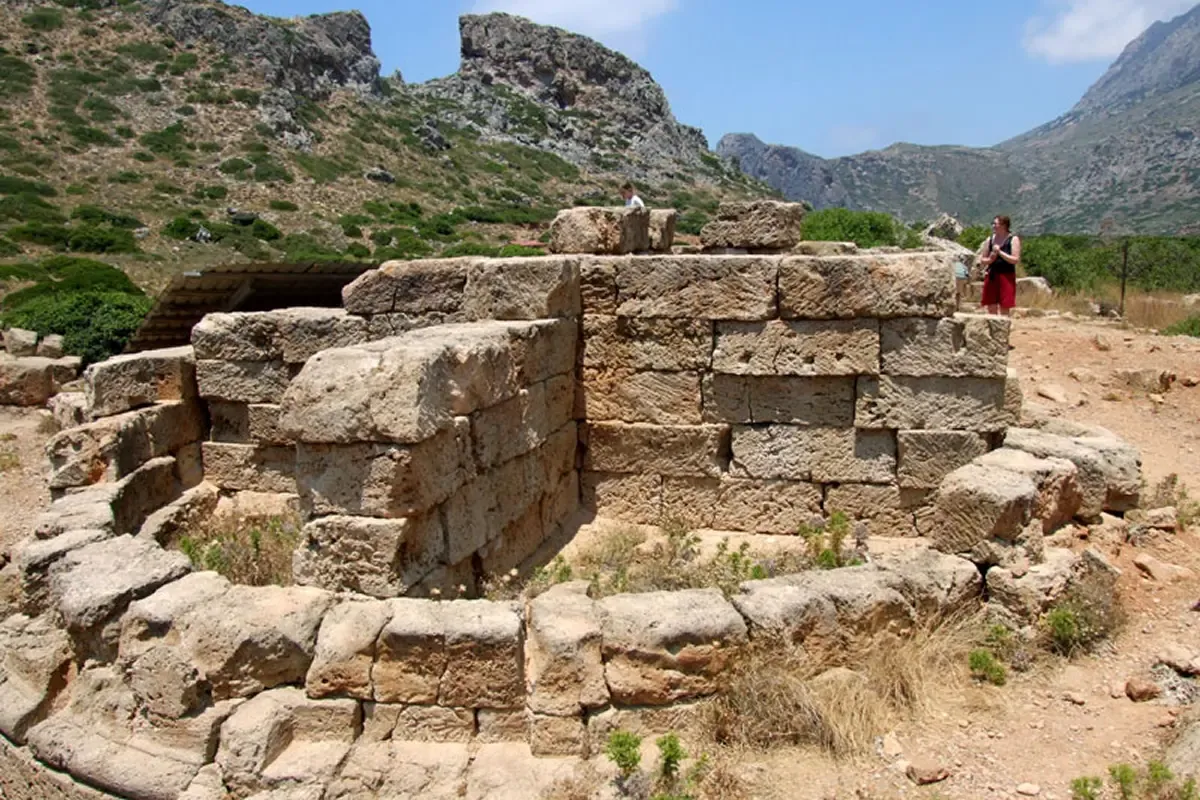
The Fortified Harbor Basin: Walk the perimeter of the ancient rectangular basin. You can clearly see the carved stone blocks where ships were moored and the defensive military towers that guarded the entrance canal.
-
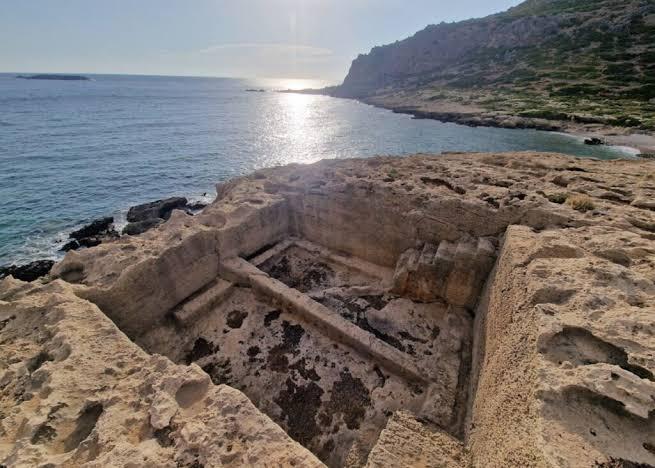
The Ancient Stone Throne: Located just outside the main fenced archaeological zone near the dirt path, this is a massive, imposing seat carved directly out of a single rock. While locals call it the “Throne of Poseidon,” historians believe it was actually a prominent podium used by public speakers or city magistrates.
-
The Monolithic Tombs: Just up the slope, you can observe ancient rock-cut tombs carved right into the rocky hillsides, part of the city’s historic necropolis.
Photo Gallery of Ancient Falassarna
💡 Practical Visitor Guide for ChaniaLife Readers
-
How to Get There: Follow the signs to Falassarna Beach. Keep driving north past the main organized sandy beaches along the asphalt road until it turns into a dirt track. The archaeological site is located right at the northern end of the coastal plain.
-
Beating the Heat: The site is completely open to the elements with zero shade. Visit early in the morning (around 9:00 AM) or late in the afternoon. Pair it with a late afternoon swim and a sunset cocktail on the main beach!
-
Footwear: Leave the flip-flops in your beach bag. The ground is rocky, uneven, and covered in prickly Mediterranean brush. Sturdy sneakers or walking sandals are highly recommended.
The ChaniaLife.com Verdict: Don’t just work on your tan! Take a 1-hour break from the beach bars to walk through Ancient Phalassarna. Standing in a dry field where elite Hellenistic warships used to clash is an eerie, unforgettable experience that perfectly connects you to Crete’s wild history.
Exploring Falassarna right now? If you are out on the west coast and need an instant recommendation for the best authentic taverna nearby, or want to check if the evening winds are going to kick up the waves today, just open our chat! Manos, Chania’s very first Digital AI Local Advisor, is live on ChaniaLife.com 24/7 to provide fast, no-nonsense local expertise.
Plan Your Chania Trip in 60 Seconds
Skip the tourist traps. Get instant, unfiltered local advice for exactly what you need.